Types of Deck Waterproofing Systems
Professional planning, suitable materials, and licensed coordination for South Florida properties.

Waterproofing • Fort Lauderdale, FL
Outdoor decks fight water from above and below. We install coating systems that bond tight, flex with the structure, and protect both the surface and the substrate underneath.
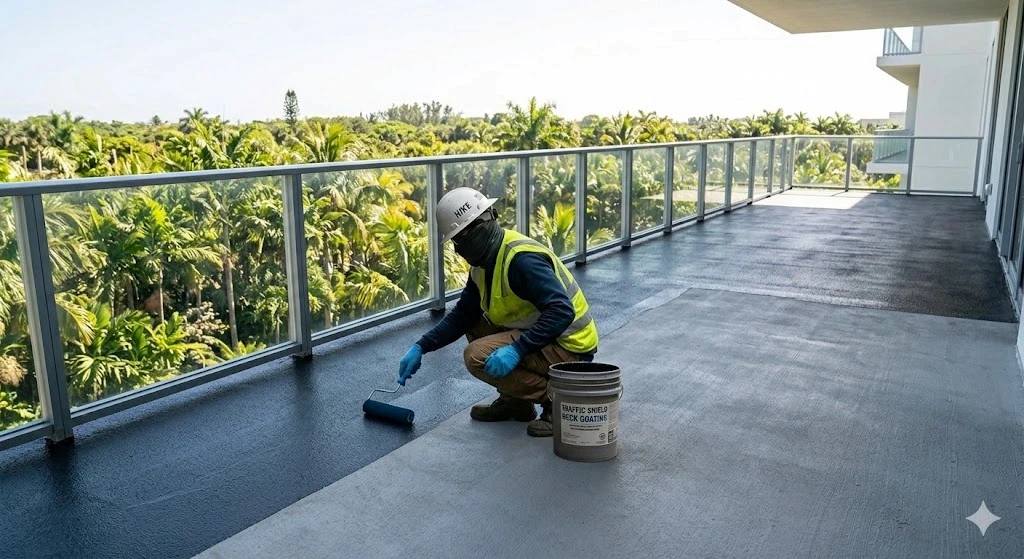
Deck Coatings That Bond, Flex, and Last
Deck waterproofing usually starts failing at edges, seams, and penetrations — places water gets in but no one notices until the damage is significant. Once moisture is under the coating, the bond fails, the substrate gets wet, and the decking material below starts breaking down. Recoating without addressing the failed spots just traps the existing moisture and accelerates the damage.
The Planet Construction Approach
We strip failed coatings, repair underlying damage, prep the substrate properly, and install a fluid-applied or membrane system engineered for the deck's traffic, sun, and water exposure. Edges, seams, and penetrations get extra attention because that's where most failures begin. The result is a deck system that actually does its job for the long term.
Service Details
Professional planning, suitable materials, and licensed coordination for South Florida properties.
Professional planning, suitable materials, and licensed coordination for South Florida properties.
Professional planning, suitable materials, and licensed coordination for South Florida properties.
Professional planning, suitable materials, and licensed coordination for South Florida properties.
Common Questions
Call us for project-specific information and a free consultation.
Call (754) 301-6747Pedestrian deck elastomeric systems typically last 10–15 years in South Florida's UV and humidity environment. Vehicular traffic coatings on parking decks last 5–10 years, depending on traffic volume and whether the surface is exposed to direct sun. UV exposure is the primary aging factor — surfaces in direct sun degrade faster than covered or shaded areas. Annual inspection and prompt repair of isolated failures extend system life significantly between full recoating cycles.
Yes — in sections. We phase deck waterproofing in defined work zones, maintaining access to portions of the deck while other sections are being prepared and coated. Each zone is closed during preparation and coating application and reopened after the specified cure period. For amenity decks in occupied condominium buildings, we coordinate the phasing schedule with the property manager to minimize resident impact and maintain access to building entrances throughout the project.
Visual signs of deck waterproofing failure include peeling or blistering of the existing coating, visible cracks in the membrane surface, water staining or efflorescence on the deck surface or at the edges, and — most critically — water stains or active leaking on the ceiling of the space below the deck. If any of these signs are present, schedule a professional assessment immediately — the longer water infiltration continues through a deck, the more extensive the structural damage that accumulates below.
Surface coating and recoating of deck surfaces typically does not require a permit. Structural repairs to the deck slab, drain replacement, or waterproofing work that is part of a broader structural restoration or repair project will require permits. We assess permit requirements during the initial project scope development and handle all permit filings where required.
Free deck inspection and coating quote. We'll evaluate every seam and penetration before we propose the work.